REAL-TIME AI STEREOSCOPIC 3D
A different kind of depth.
Nightfall estimates a depth map from a 2D image, then uses it to create separate views for your eyes. It works with ordinary streamed content; games do not need a native 3D mode.
Headset or host: choose where it runs
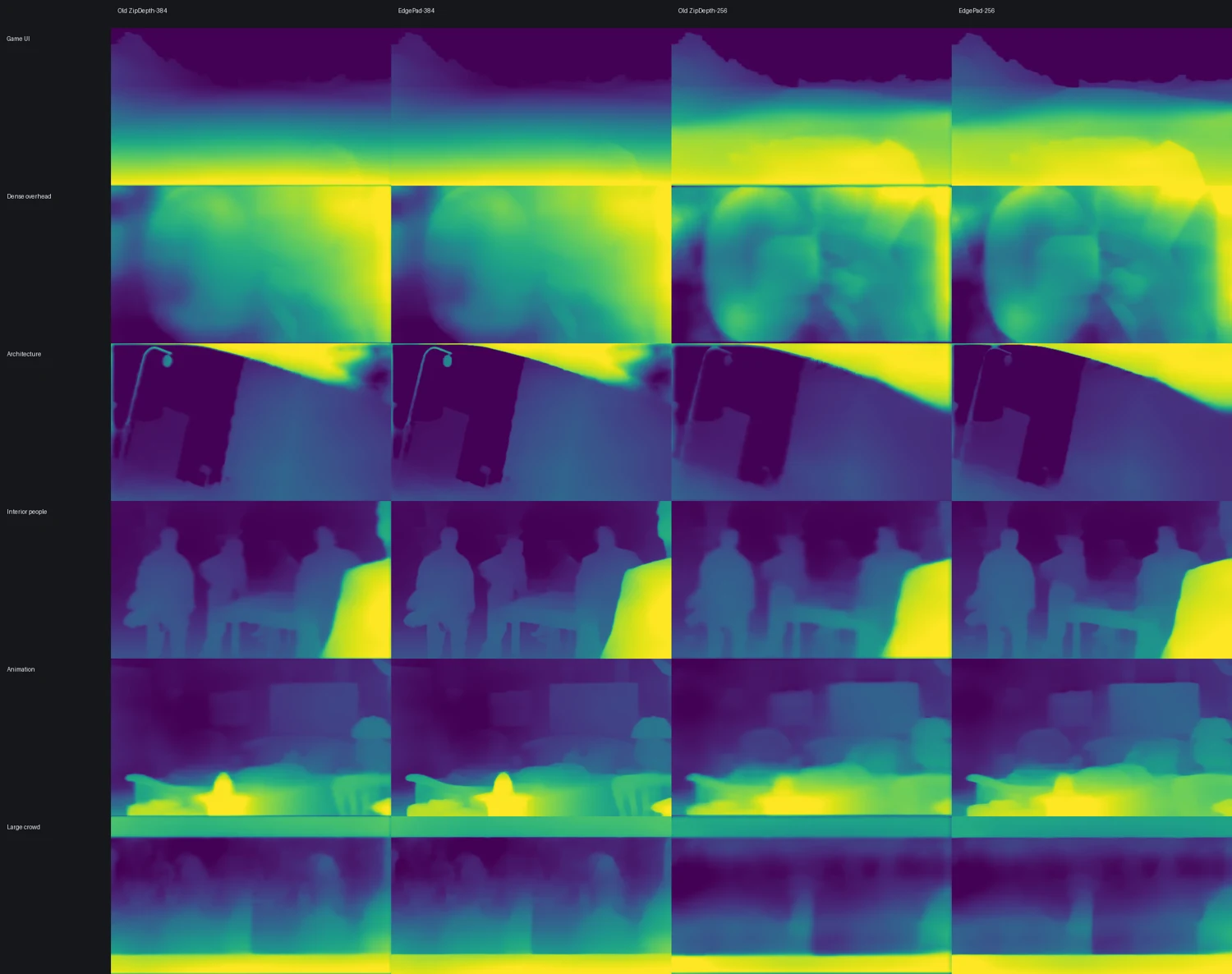
On Quest, EdgePad models run locally. With Meteor, the PC can generate depth using EdgePad or Video Depth Anything. VDA uses temporal context to improve consistency across video frames, while EdgePad is a lighter model.
In the current preview, Auto selects EdgePad-512 with OpenCL on Quest 3/3S, with EdgePad-256/OpenGL as the Quest 2 compatibility route. Manual model choices let you compare the quality and cost.
Keep the stream responsive
Stream priority is the default: it protects video decoding and rendering while inference shares GPU time. AI 3D priority favors depth throughput. A high depth-update number alone does not mean the game will feel more responsive.
What should I expect?
This is an estimated view, not native stereo rendering. The model cannot see what is hidden behind an object. Thin geometry, hair, text, fast motion and disoccluded edges can produce artifacts. Strong separation makes those errors more visible.
Use a comfortable separation rather than maximum depth. The final depthmap view helps distinguish a model problem from a rendering problem. Native SBS content can use Nightfall's SBS modes instead of estimated depth.
Want to help improve it?
Report the model, depth source, content type and settings alongside a log. Static edge alignment and motion stability are different problems, so a repeatable example is especially useful.